
Chair of Logistics Engineering, Technologies, and Processes
Constructor University Bremen
School of Business, Social, and Decision Sciences
- Intelligent planning and control of logistics systems
- Intelligent algorithms for dynamic production and logistics planning
- Modeling and simulation of supply chain processes and the circular economy in the automotive industry
- Large language models (LLM) in production and logistics
- Large-format additive manufacturing in spare parts logistics
- Production systems, supply chain management
- Automotive, steel, and energy industries
- Algorithm development for dynamic production and inventory planning
- Development of dynamic simulation models for production and logistics processes
- Prototype construction with large-format 3D printer
- LLM implementation in requirements management and tenders
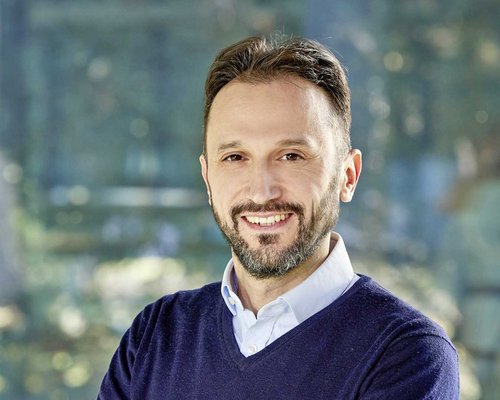
Prof. Dr. Dr.-Ing. Yilmaz Uygun
Logistics Engineering, Technologies, and Processes
Yilmaz Uygun studied Industrial Engineering/European Studies in Technology and Management at the South Westphalia University of Applied Sciences (2004) and Logistics Management (M.Sc., 2006) and Logistics Engineering (M.Eng., 2007) at the University of Duisburg-Essen. In 2012, he received his doctorate from TU Dortmund University with a thesis on integrated capacity exchanges, and in 2013 from the University of Duisburg-Essen with a dissertation on the development of a diagnostic system for holistic production systems. After working as a research assistant at TU Dortmund University and Fraunhofer IML (2006-2010), he took over as senior engineer and executive director of the Chair of Factory Organization at TU Dortmund University in 2010. From 2013 to 2016, Uygun was a postdoctoral researcher at the Industrial Performance Center at MIT. Since 2016, he has been Professor of Logistics Engineering, Technologies, and Processes at Constructor University in Bremen, where he is responsible for the master's programs in Supply Chain Management (SCM) and SCM online, among other things. His research focuses on data-driven analysis and algorithmic optimization of logistics and supply chain processes, anticipatory inventory planning, large-format 3D printing, and the modeling and simulation of complex systems.